
Exploring the realm of eye health is essential for maintaining overall well-being. From the impact of poor eye health to preventive measures against common eye conditions, this guide offers valuable insights to help you prioritize your vision.
Eye health is not just about seeing clearly; it’s about taking proactive steps to ensure your eyes remain healthy and functional for years to come.
Introduction to Eye Health
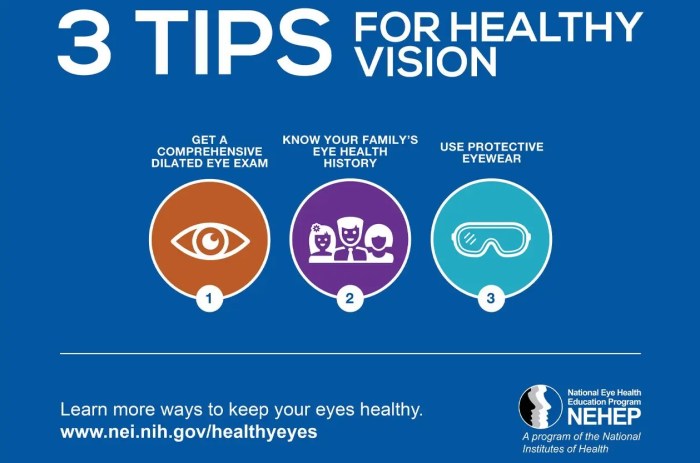
Eye health is essential for maintaining overall well-being as our eyes play a crucial role in our daily lives. Proper eye care is necessary to prevent various eye conditions and ensure optimal vision.
The Impact of Poor Eye Health
Poor eye health can have significant consequences on our overall health and quality of life. Untreated eye conditions can lead to vision impairment, affecting our ability to perform daily tasks and reducing our quality of life.
Common Eye Conditions Preventable with Proper Care
- Refractive errors such as nearsightedness, farsightedness, and astigmatism can be corrected with glasses or contact lenses.
- Age-related macular degeneration (AMD) can be prevented or slowed down with a healthy lifestyle and regular eye exams.
- Glaucoma, a leading cause of blindness, can be managed through early detection and treatment.
- Cataracts, clouding of the eye’s lens, can be surgically removed to restore clear vision.
Importance of Regular Eye Exams
Regular eye exams are crucial for maintaining good eye health and overall well-being. These routine check-ups play a vital role in detecting any potential issues early on, allowing for timely intervention and treatment to prevent further complications.
Early Detection of Eye Diseases
Regular eye exams can help identify early signs of common eye diseases such as glaucoma, cataracts, and macular degeneration. Detecting these conditions at an early stage increases the chances of successful treatment and preservation of vision.
Schedule for Eye Examinations
It is recommended that individuals undergo a comprehensive eye exam at least once every two years, even if they do not have any apparent vision problems. For those with existing eye conditions or risk factors, such as diabetes or a family history of eye disease, more frequent check-ups may be necessary as advised by an eye care professional.
Tips for Maintaining Good Eye Health
Maintaining good eye health is crucial for overall well-being. Here are some practical tips to help protect your eyes and maintain optimal vision.
Protecting Eyes from UV Exposure
- Wear sunglasses that block 100% of UVA and UVB rays to protect your eyes from harmful UV exposure.
- Avoid direct sunlight between 10 am and 4 pm when UV rays are strongest.
- Use wide-brimmed hats for added protection against UV rays.
- Consider wearing protective eyewear when participating in outdoor activities or sports.
Dietary Recommendations for Promoting Eye Health
- Incorporate foods rich in antioxidants such as leafy greens, carrots, and berries into your diet to support eye health.
- Include omega-3 fatty acids found in fish, flaxseeds, and walnuts to reduce the risk of age-related eye conditions.
- Stay hydrated by drinking plenty of water to maintain good eye lubrication and overall health.
Importance of Proper Lighting and Minimizing Screen Time
- Ensure adequate lighting when reading or working to reduce eye strain and prevent fatigue.
- Follow the 20-20-20 rule – take a 20-second break every 20 minutes and look at something 20 feet away to reduce eye strain from screens.
- Adjust screen brightness and contrast settings to minimize glare and protect your eyes from excessive screen exposure.
Eye Care for Different Age Groups
Maintaining good eye health is essential at every stage of life, from childhood to adulthood and into our senior years. Each age group faces unique challenges when it comes to eye care, and adopting the right habits early on can help prevent vision problems in the future.
Eye Health Tips for Children
Children’s eyes are still developing, so it’s crucial to prioritize eye health from a young age. Here are some tips to keep their eyes healthy:
- Encourage outdoor play to reduce the risk of myopia.
- Ensure they take breaks while using screens to prevent digital eye strain.
- Provide a balanced diet rich in nutrients like vitamin A, C, and E.
Common Eye Issues in Adults and Preventive Measures
As adults age, they may encounter various eye problems. To maintain optimal eye health, adults should:
- Schedule regular eye exams to detect any issues early on.
- Protect their eyes from UV rays by wearing sunglasses outdoors.
- Avoid smoking, as it can increase the risk of eye diseases like cataracts.
Recommendations for Seniors to Maintain Optimal Eye Health
Seniors are more susceptible to conditions like macular degeneration and glaucoma. Here are some recommendations to safeguard their eye health:
- Visit an eye doctor annually for comprehensive eye exams.
- Manage chronic conditions like diabetes that can affect vision.
- Ensure proper lighting in living spaces to prevent falls and eye strain.
The Role of Nutrition in Eye Health
Nutrition plays a crucial role in maintaining good eye health. Certain nutrients like vitamin A, C, and E have been found to benefit eye health by reducing the risk of age-related macular degeneration, cataracts, and other eye conditions.
Foods Rich in Antioxidants for Healthy Vision
Antioxidants are essential for protecting the eyes from damage caused by free radicals. Foods rich in antioxidants such as beta-carotene, lutein, zeaxanthin, and zinc can help maintain healthy vision. Some examples of these foods include:
- Carrots
- Spinach
- Kale
- Oranges
- Berries
List of Superfoods for Eye Health
Superfoods are nutrient-dense foods that provide a wide range of vitamins and minerals beneficial for eye health. Incorporating these superfoods into your diet can help support overall eye health. Some superfoods for eye health include:
- Salmon
- Walnuts
- Chia seeds
- Blueberries
- Broccoli
Eye Exercises and Vision Improvement
Regular eye exercises can help reduce eye strain, improve focus, and maintain good vision health. Incorporating eye yoga and relaxation techniques into your daily routine can also provide numerous benefits for your eyes. Additionally, maintaining good posture is essential for preventing eye strain and promoting overall eye health.
Benefits of Eye Exercises
- Enhances eye flexibility and strength.
- Improves blood circulation to the eyes.
- Reduces eye fatigue and strain from prolonged screen time.
- Helps maintain optimal vision and focus.
Eye Yoga and Relaxation Techniques
- Palming: Rub your palms together to generate heat and place them gently over closed eyes for a few minutes to relax and soothe tired eyes.
- Blinking: Regularly blinking helps moisten the eyes and reduce dryness, especially when focusing on screens for extended periods.
- Eye Rolling: Slowly roll your eyes in a circular motion to improve eye mobility and reduce stiffness.
- Focus Shifting: Practice focusing on objects at varying distances to enhance eye coordination and flexibility.
Tips for Maintaining Good Posture
- Sit at an appropriate distance from screens to reduce eye strain.
- Ensure proper lighting to avoid glare and reflections on screens.
- Take regular breaks to rest your eyes and stretch your body.
- Adjust the height of your computer screen to align with your eye level for comfortable viewing.
Incorporating Eye Health into Daily Routine
Integrating eye care practices into your daily routine is essential for maintaining optimal eye health. By making simple adjustments, you can protect your vision and prevent potential eye problems.
Creating a Healthy Workspace
When setting up your workspace, consider the following tips for promoting good eye health:
- Avoid glare from windows or overhead lighting by positioning your computer screen perpendicular to light sources.
- Adjust your monitor’s brightness and contrast settings to reduce eye strain.
- Use an anti-glare screen protector to minimize reflections and glare.
- Follow the 20-20-20 rule by looking away from your screen every 20 minutes and focusing on an object 20 feet away for at least 20 seconds.
Importance of Hydration
Staying adequately hydrated is crucial for maintaining good eye function. Dehydration can lead to dry eyes, causing discomfort and vision problems. To ensure proper hydration:
- Drink at least 8-10 glasses of water per day to keep your body and eyes hydrated.
- Avoid excessive consumption of caffeinated or alcoholic beverages, as they can contribute to dehydration.
- Include hydrating foods in your diet, such as fruits and vegetables with high water content.
Seeking Professional Eye Care Services
When it comes to maintaining good eye health, seeking professional eye care services is essential. Eye care specialists play a crucial role in diagnosing and treating various eye conditions, as well as providing preventive care to preserve vision.
When to Consult an Eye Care Specialist
- If you experience sudden changes in vision, such as blurriness or double vision, it is important to consult an eye care specialist immediately.
- Eye pain, redness, or irritation that persists should also prompt a visit to an optometrist or ophthalmologist.
- Individuals with a family history of eye diseases like glaucoma or macular degeneration should schedule regular appointments with an eye care provider.
Role of Optometrists and Ophthalmologists
-
Optometrists
are primary eye care providers who can perform eye exams, prescribe corrective lenses, and diagnose common eye conditions.
-
Ophthalmologists
are medical doctors specializing in eye care and can perform surgeries, treat complex eye diseases, and manage overall eye health.
Choosing the Right Eye Care Provider
- Consider your specific needs – whether you require routine eye exams, treatment for a specific condition, or surgical intervention.
- Check the credentials and experience of the eye care provider to ensure they are qualified to address your concerns.
- Seek recommendations from family, friends, or your primary care physician to find a reputable eye care specialist.
Importance of Health Insurance for Eye Care
Having health insurance coverage for eye-related services is crucial for maintaining good eye health and addressing any potential issues that may arise. It provides financial protection and ensures access to necessary treatments and procedures.
Benefits of Health Insurance for Eye Care
- Coverage for routine eye exams: Health insurance typically covers regular eye exams, allowing individuals to monitor their eye health and detect any problems early on.
- Financial assistance for eye treatments: Health insurance can help cover the costs of various eye treatments, such as cataract surgery, LASIK, or treatment for eye infections.
- Access to vision correction devices: Health insurance may cover all or part of the costs of prescription eyeglasses, contact lenses, or other vision correction devices.
Common Eye Procedures and Treatments Covered by Health Insurance
- Refractive surgeries like LASIK
- Cataract surgery
- Treatment for glaucoma
- Eye infection treatments
Tips for Selecting a Health Insurance Plan for Comprehensive Eye Care
- Check for coverage of routine eye exams and screenings.
- Look for plans that cover a wide range of eye treatments and procedures.
- Consider the network of eye care providers included in the insurance plan.
- Review the out-of-pocket costs, deductibles, and co-pays for eye care services.
- Ensure that the plan covers emergency eye care services.
Advances in Medical Research for Eye Health
Medical research in the field of ophthalmology has seen significant advancements in recent years, leading to improved prevention and treatment of various eye diseases. Innovative technologies and breakthroughs have revolutionized eye care outcomes, offering new hope for patients seeking better vision and eye health.
Recent Developments in Ophthalmology
- Gene therapy for inherited retinal diseases has shown promising results in clinical trials, offering potential long-term solutions for genetic eye disorders.
- Nanotechnology is being utilized to develop targeted drug delivery systems for treating conditions such as glaucoma and age-related macular degeneration, enhancing treatment efficacy while minimizing side effects.
- Artificial intelligence and machine learning algorithms are being integrated into diagnostic tools, enabling early detection of eye diseases and personalized treatment plans based on individual patient data.
Contribution of Medical Research to Eye Disease Prevention and Treatment
- Research studies on the role of antioxidants and vitamins in eye health have led to the development of nutritional supplements that support macular health and reduce the risk of age-related vision loss.
- Advancements in corneal transplantation techniques, such as Descemet’s membrane endothelial keratoplasty (DMEK), have improved surgical outcomes for patients with corneal disorders, offering faster recovery and better visual acuity.
- Stem cell research holds promise for regenerative therapies in conditions like retinal degeneration and optic nerve damage, potentially restoring vision in patients with irreversible vision loss.
Innovative Technologies in Eye Care
- Augmented reality devices are being used for low vision rehabilitation, helping visually impaired individuals enhance their remaining vision and improve daily functioning.
- Retinal imaging technologies, such as optical coherence tomography (OCT) and fundus photography, provide detailed visualization of the retina, aiding in the early detection and monitoring of retinal diseases like diabetic retinopathy and age-related macular degeneration.
- Implantable devices, like intraocular lenses and retinal prostheses, offer new treatment options for patients with refractive errors and retinal degenerative diseases, restoring functional vision and improving quality of life.
Conclusive Thoughts
In conclusion, prioritizing eye health through regular check-ups, proper care, and a balanced lifestyle is key to safeguarding your vision. By incorporating these healthcare tips into your daily routine, you can maintain optimal eye health and prevent potential issues in the future.
Questions and Answers
How often should I have an eye exam?
It is recommended to have a comprehensive eye exam at least once a year, especially if you have existing eye conditions or risk factors.
What foods are good for eye health?
Foods rich in omega-3 fatty acids, leafy greens, and colorful fruits like berries are beneficial for eye health due to their antioxidants and vitamins.
Can eye exercises improve vision?
While eye exercises may help reduce eye strain and improve focus, they are not a guaranteed way to correct vision problems. Consult an eye care professional for personalized advice.


